Expedia Group released Unpack '27 on October 14, 2026, including Vrbo's Hobby Hubs theme: vacation homes used as a base for trips organized around an interest. For an owner, that raises a concrete question. Can the home comfortably support what guests want to do together?
A dining room can be attractive in a listing and still be awkward for a puzzle afternoon. The table may be too small once everyone sits down, the overhead light may create glare, or the only place to store an unfinished activity may also be needed for meals. Reviewing those details is a useful way to assess this trend before buying equipment.
Read the survey as a signal to investigate
Vrbo reports that 68% are likely to take a hobby-focused trip in 2027, rising to 79% among Gen Z and Millennials. Its OnePoll study surveyed 10,000 adults with vacation-rental experience across seven countries, online from August 3–27, 2026.
Likely to take a hobby-focused trip in 2027
Data source: Vrbo Hobby Hubs / OnePoll, August 2026
View exact values
| Period | Value |
|---|---|
| Overall survey sample | 68% |
| Gen Z and Millennials | 79% |
These are stated intentions. The younger group is part of the overall sample, so the bars are overlapping groups. The chart supplies neither a local booking forecast nor an estimate of the revenue a particular amenity will produce. It also does not identify which activity fits your home.
Our reading is to treat the finding as a reason to investigate a specific guest use. Start with the property you have and the questions guests actually ask. A small, practical improvement can be evaluated against those needs without assuming the survey describes your future occupancy.
Turn an activity into a usable space
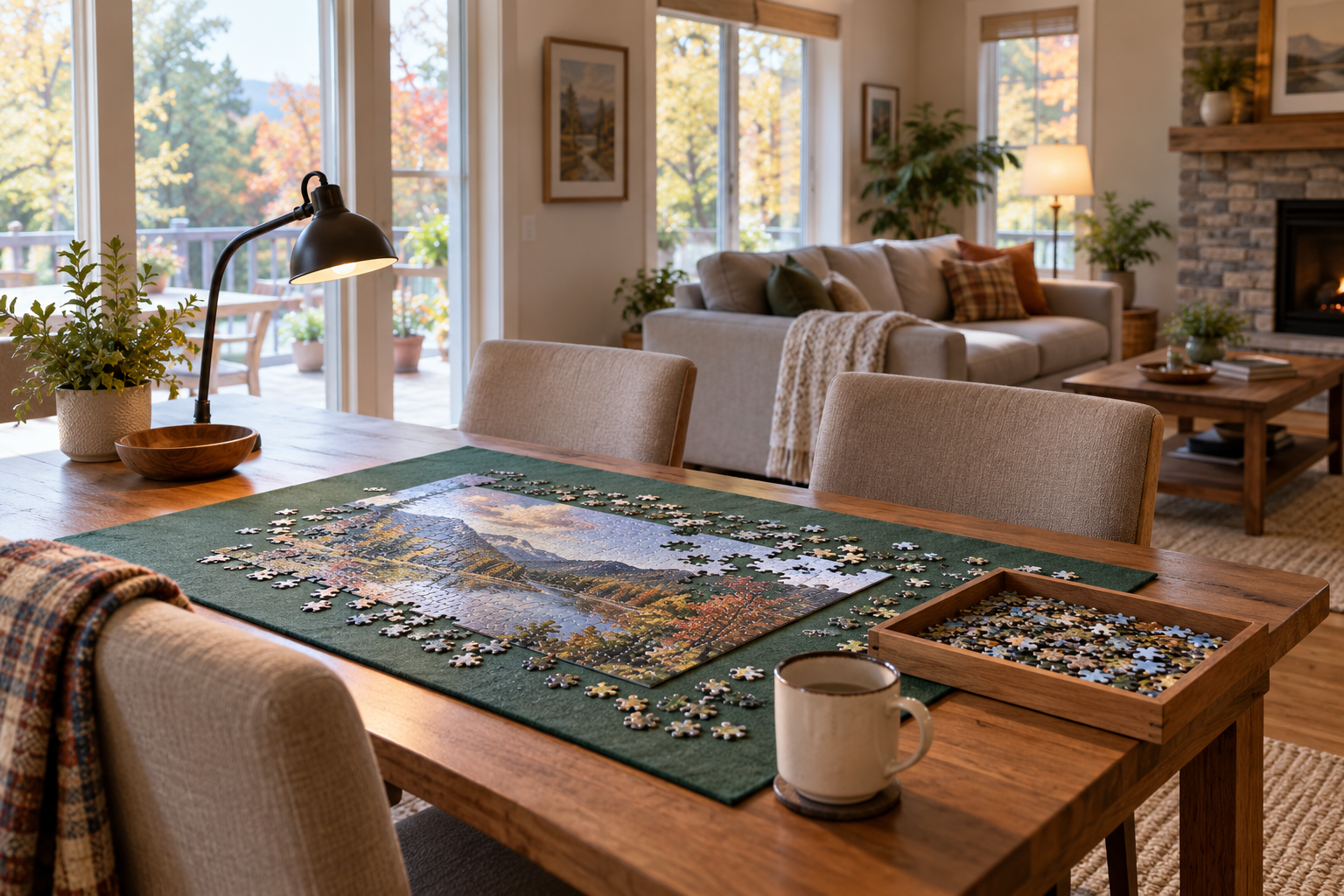
Choose an activity the existing layout can support comfortably. Quiet tabletop activities offer a straightforward example: assess the surface, seating, light and storage as a connected setup. The same method can be applied to another activity, provided the property's actual features support it.
| Guest need | What to verify at the home | What to record for operations |
|---|---|---|
| Shared table space | Usable surface and seating with people in place | Setup photo and inventory |
| Comfortable activity lighting | Visibility and glare at the intended time of use | Lamp location and working-condition check |
| Pause and resume | A storage or removable-mat solution that also permits meals | Storage instructions and reset steps |
| Supplies ready to use | Contents, completeness and condition | Replacement responsibility and cost |
Walk through the activity as a guest would. Place the chairs, sit at the table and check whether people can still move through the room. Try the lighting after daylight fades. Confirm where an unfinished puzzle or game can go when the group needs the table for dinner.
Keep the sleeping capacity, permitted guest count and house rules consistent with the stay being offered. An activity space should fit the home's existing operating limits. If a proposed use needs a different arrangement, resolve that before describing it to guests.
Make the listing promise verifiable
Once the setup works, photograph the actual space and describe what is available. Useful information includes the table dimensions, the number of usable seats, where supplies are stored and whether the area is shared with dining. State any meaningful limitation that affects use.
Avoid assigning a theme to the whole house when the offering is a single activity corner. Guests should be able to understand the feature from the photographs and description. That also gives the operator a clear standard for checking the room before arrival.
Keep an inventory specific enough for the turnover team to use. A note saying “games provided” leaves several questions unanswered. Record which items belong in each container, how they should be presented and how a missing or damaged item is reported. Update the description if the available equipment changes.
Budget the feature through its full operating cycle
The purchase price is only one part of the decision. Include setup work, storage, cleaning time, checks for missing pieces and eventual replacement. Ask the people who will reset the home to try the process and quote any additional work.
A practical decision measure is the extra booking income retained after the feature's added operating costs. Keep that separate from the initial investment. If you have no evidence of additional income yet, record it as unknown and set a spending limit you can justify on that basis.
Also review what the feature displaces. A dedicated activity table may use space previously available for dining, work or luggage. A reversible setup can help preserve those uses while you learn whether guests value the addition.
Run a small trial and keep a useful record
Define a trial that can be reviewed:
- Inventory the space and existing equipment. Identify one guest use that the home can support.
- Obtain setup and reset costs, assign responsibility and agree on a budget before purchasing.
- Publish accurate photographs and a precise description once the feature is available.
- Track relevant inquiries, guest feedback, equipment use, extra reset work and replacement spending.
- Review the evidence and decide whether to retain, revise or remove the feature.
Bookings alone will not explain the result. Season, pricing, availability and other listing changes can affect performance at the same time. Record those changes alongside the trial so you can interpret feedback and operating costs with appropriate care.
For a Southern California property, local demand and the home's layout still determine whether a proposed activity makes sense. The report offers a question to test. The owner needs a setup that can be delivered consistently and a cost record that supports keeping it.
Sources and research period
Expedia Group announcement, October 14, 2026: https://www.prnewswire.com/news-releases/unpack-27-expedia-hotelscom-and-vrbo-reveal-the-travel-trends-inspiring-the-world-in-2027-302907800.html
Vrbo Hobby Hubs; OnePoll online research, August 3–27, 2026: https://www.vrbo.com/unpack27/hobby-hubs
GnG Vacation current services, checked October 15, 2026: https://www.gngvacation.com/