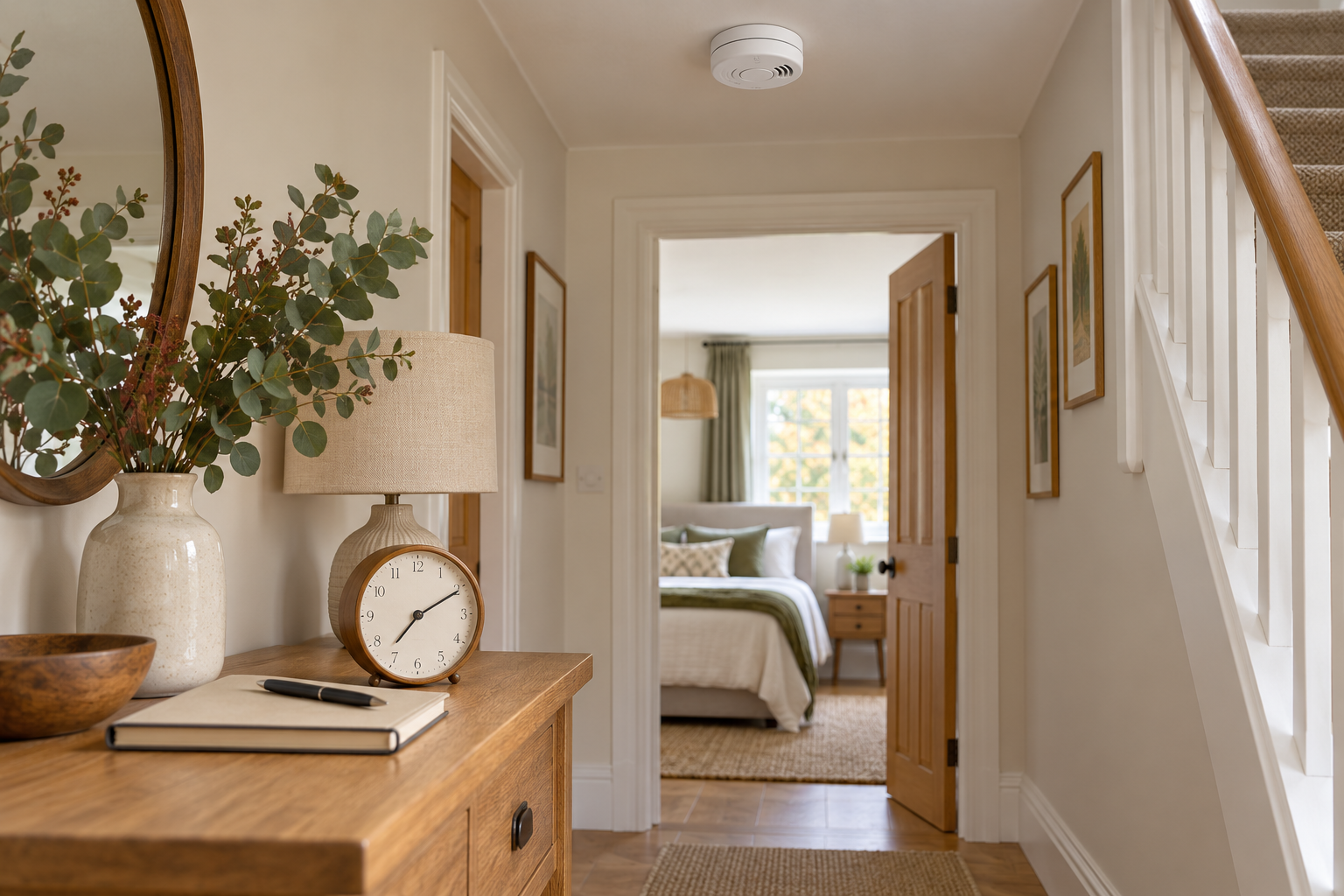
Daylight saving time ended today, November 1, 2026, in U.S. areas that observe it. At 2 a.m. local time, clocks returned to 1 a.m., according to NIST. For Southern California rentals, use the change to review both schedules and alarm checks.
CPSC's January 23, 2026 safety guidance recommends testing smoke and carbon monoxide (CO) alarms every month. Today's clock change is a reminder, rather than a substitute for that routine.
Before the next arrival
- Check the time: Confirm the property's clocks and the local time shown in arrival messages, cleaner appointments and device schedules. Review settings instead of assuming every device adjusted automatically.
- Test and record: Follow each alarm's manufacturer instructions. Record the date, device and result. CPSC notes that a CO alarm's test button checks circuitry, not sensor accuracy.
- Match maintenance to the device: Check replaceable batteries and the manufacturer's replacement date. Follow the instructions for sealed-battery units; the clock change is not a reason to open them.
Sources: NIST's current 2026 clock-change rules; CPSC's January 23 safety guidance and CO-alarm FAQ. Checked November 1, 2026. https://www.nist.gov/pml/time-and-frequency-division/popular-links/daylight-saving-time-dst https://www.cpsc.gov/Newsroom/News-Releases/2026/Keep-Warm-and-Safe-This-Winter-Tips-for-Using-Generators-Furnaces-and-Space-Heaters https://www.cpsc.gov/Safety-Education/Safety-Education-Centers/Carbon-Monoxide-Information-Center/Carbon-Monoxide-Questions-and-Answers